
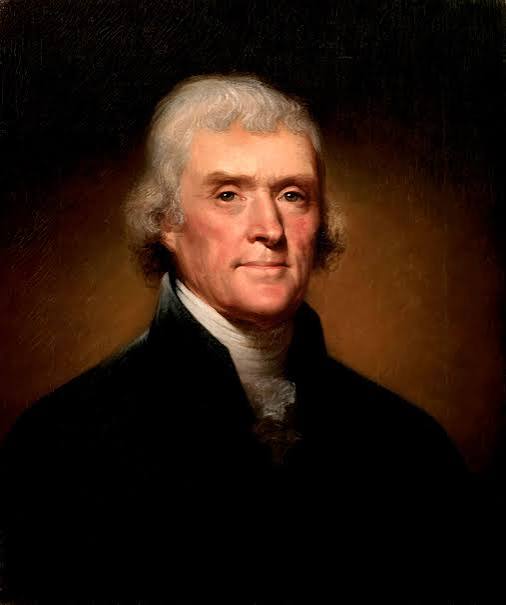
Thomas Jefferson wrote the words that launched a country, then spent decades trying to live up to them. This biography covers his upbringing in Virginia, his political career, and the well-documented contradictions in his life, including his ownership of enslaved people.
Background
Jefferson is one of the most searched Founding Fathers because his role is so central: he wrote the Declaration of Independence, served as the first Secretary of State, and became the third U.S. president. He’s also one of the most debated figures in American history, largely because of the gap between the equality he wrote about and the fact that he enslaved more than 600 people over his lifetime. People searching his name usually want both the achievements and that fuller picture.
Latest Update
As of August 2026, Monticello and academic historians continue public education efforts around Jefferson’s full record, including his relationship with Sally Hemings, which DNA and historical evidence support as a decades-long relationship that produced children. This has been a settled area of historical consensus for some time rather than a new development. No unconfirmed claims are treated as fact in this article; where sources disagree on details, that disagreement is noted.
Full Profile
Family and Early Life
Jefferson was born in 1743 in Shadwell, Virginia, to a prosperous planter family. His father Peter Jefferson died when Thomas was fourteen, leaving him a substantial inheritance of land and enslaved people at a young age, which shaped his life as a plantation owner from adolescence onward.
Career Path
Jefferson trained as a lawyer, served in the Virginia House of Burgesses, and gained national attention drafting the Declaration of Independence in 1776. He later served as Governor of Virginia, U.S. Minister to France, the first Secretary of State under Washington, Vice President under John Adams, and finally as the third President of the United States from 1801 to 1809, during which the Louisiana Purchase roughly doubled the size of the country.
Age
Jefferson lived to age 83, born April 13, 1743, and dying July 4, 1826.
Religion
Jefferson held Deist and Unitarian-leaning views, questioning organized religious dogma while still respecting Christian ethical teaching. He famously edited his own version of the New Testament, removing miracles and supernatural elements to focus on moral teaching.
Spouse/Partner
Jefferson married Martha Wayles Skelton in 1772; she died in 1782. He did not remarry. Historical and DNA evidence supports a long-term relationship with Sally Hemings, an enslaved woman at Monticello, which produced children; this is treated by most historians today as settled, not speculative.
Net Worth
Jefferson was frequently in serious debt for much of his adult life, partly due to plantation costs and lavish spending, and died deeply in debt despite owning extensive land and enslaved people. A modern dollar-equivalent net worth is not reliably calculable and is unconfirmed.
Parents
His father was Peter Jefferson, a surveyor and planter, and his mother was Jane Randolph, from a well-established Virginia family.
Height
Jefferson was tall for his era, commonly cited at around 6 feet 2 inches, based on contemporary accounts.
Education
Jefferson studied at the College of William & Mary in Williamsburg, Virginia, then trained in law under George Wythe, a respected Virginia legal scholar.
Hometown/State of Origin
Jefferson was born at Shadwell, near present-day Charlottesville, Virginia, and later built his famous home, Monticello, nearby.
Official/Archival Link
Monticello (Official Thomas Jefferson Foundation Site)
Legacy and Lasting Impact
Jefferson’s legacy is unusually split. His writing shaped the philosophical language Americans still use to talk about liberty and self-government, and his presidency, particularly the Louisiana Purchase, changed the physical shape of the country. At the same time, his record as one of the largest individual enslavers among the Founding Fathers is now treated as a core part of any honest account of his life, not a footnote.
Modern institutions connected to Jefferson, including Monticello itself, have shifted over the past two decades toward presenting this fuller picture, incorporating the documented histories of the people he enslaved alongside his political achievements. That shift reflects a broader change in how American history addresses its founding figures.
| Date | Event |
|---|---|
| 1743 | Born at Shadwell, Virginia |
| 1762-1767 | Attends William & Mary, then studies law |
| 1776 | Drafts the Declaration of Independence |
| 1785-1789 | Serves as U.S. Minister to France |
| 1801-1809 | Serves as third President of the United States |
| 1803 | Completes the Louisiana Purchase |
| 1819 | Founds the University of Virginia |
| 1826 | Dies on July 4, the same day as John Adams |
Historical Context
Jefferson came of age during a period when Virginia’s planter elite dominated colonial politics, and his early legal training under George Wythe placed him directly within networks of lawyers and politicians who would go on to shape the Revolution and the new nation’s early government.
That same Virginia planter economy, however, depended structurally on slave labor, a contradiction Jefferson wrote about abstractly at times but never resolved in his own practices. Understanding his biography requires holding both the intellectual environment that shaped his political ideas and the economic system that funded his entire way of life.
Reader Questions (FAQ)
What is Thomas Jefferson best known for?
He is best known for writing the Declaration of Independence in 1776 and for serving as the third President of the United States from 1801 to 1809.
Did Thomas Jefferson enslave people?
Yes. Jefferson enslaved more than 600 people over his lifetime at Monticello and elsewhere, a fact that sits alongside his authorship of the Declaration’s language on equality.
Who was Sally Hemings?
Sally Hemings was an enslaved woman at Monticello with whom historical and DNA evidence indicate Jefferson had a decades-long relationship that produced children; this is considered settled by mainstream historians.
What did Jefferson do as president?
As president, Jefferson completed the Louisiana Purchase in 1803, roughly doubling U.S. territory, and commissioned the Lewis and Clark Expedition to explore the new land.
Did Jefferson found any institutions?
Yes, he founded the University of Virginia in 1819 and personally designed much of its campus.
Why is Jefferson still discussed so much today?
His authorship of core American founding language combined with his record as an enslaver makes him a frequent subject in ongoing conversations about how the U.S. reconciles its founding ideals with its history.
Did Thomas Jefferson free any of the people he enslaved?
He freed only a small number, mostly members of the Hemings family, either during his life or in his will; the vast majority of the more than 600 people he enslaved over his lifetime were not freed.
What is Jefferson’s most quoted line from the Declaration?
The phrase ‘all men are created equal’ is his most widely quoted line, and it remains central to ongoing discussions about the gap between founding ideals and founding-era realities.
Did Jefferson write about slavery in his own works?
Yes, in writings like Notes on the State of Virginia he criticized slavery in the abstract while continuing to enslave people himself throughout his life, a contradiction historians widely note when assessing his legacy.
What role did Jefferson play in founding the Democratic-Republican Party?
He was a key founder of the Democratic-Republican Party in the 1790s, which opposed the Federalist Party’s vision of a stronger central government and became one of the era’s two dominant political factions.
Wrap-Up
Jefferson’s life resists a simple summary. He put some of the most quoted words about liberty and equality into American political language, while at the same time building his wealth on slavery and never freeing most of the people he enslaved.
Understanding him means holding both facts at once: the writer whose words shaped a nation’s self-image, and the enslaver whose actions contradicted them. Modern historians and institutions like Monticello now present both sides rather than one polished version.
That’s likely why Jefferson remains one of the most searched Founding Fathers. He’s not a simple hero figure, he’s a genuinely complicated one, and readers today tend to want the full picture rather than the shortened textbook version.
Readers looking for a single-sentence verdict on Jefferson usually won’t find one that satisfies everyone, and that’s arguably the point. His life is better understood as a genuine tension between stated ideals and lived practice than as a clean story in either direction.
Jefferson’s writings and correspondence also reveal a man who was intellectually restless throughout his life, engaging with architecture, science, agriculture, and law alongside politics. This breadth is part of why he remains such a frequently referenced historical figure across so many different academic disciplines, not just political history.

John Wood is the founder and lead editor of Biography Region. He researches and writes accurate, engaging biographies of celebrities, entrepreneurs, influencers, and public figures, delivering well-sourced, reader-focused content that informs and inspires.