

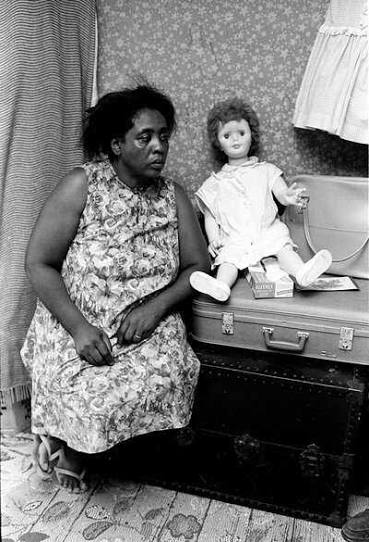
Fannie Lou Hamer spent most of her early life working cotton fields in Mississippi, then became one of the most powerful voices for Black voting rights in the country. This biography covers her journey from sharecropping to national civil rights leadership.
Background
People search Fannie Lou Hamer’s name largely because of her blunt, memorable public testimony and her line ‘I’m sick and tired of being sick and tired,’ along with her role challenging Mississippi’s all-white Democratic delegation at the 1964 national convention.
Latest Update
As of August 2026, Hamer’s legacy continues to be commemorated through institutions bearing her name focused on voting rights education, particularly in Mississippi. No new biographical detail has recently emerged; renewed attention to her story tends to track with broader national conversations about voting access and voting rights legislation.
Full Profile
Family and Early Life
Hamer was born in 1917 in Montgomery County, Mississippi, the youngest of twenty children in a sharecropping family. She began working in the cotton fields around age six and had limited access to formal schooling due to the demands of farm labor.
Career Path
Hamer became involved in civil rights activism in 1962 after attending a meeting about voter registration, which led to her losing her sharecropping job and facing violent retaliation, including a severe beating in jail in 1963 that caused lasting injuries. She went on to help found the Mississippi Freedom Democratic Party, testified before the Credentials Committee at the 1964 Democratic National Convention about the violence and discrimination Black Mississippians faced trying to vote, and continued organizing for voting rights and economic justice for the rest of her life.
Age
Hamer lived to age 59, born October 6, 1917, and dying March 14, 1977.
Religion
Hamer was a devout Christian, and her faith heavily informed both her personal resilience and the language she used in her public speeches and testimony.
Spouse/Partner
Hamer married Perry ‘Pap’ Hamer in 1945; the couple adopted and raised several children together.
Net Worth
Hamer lived much of her life in poverty as a sharecropper and later as a full-time activist earning modest wages from civil rights organizing work. A specific net worth figure is not documented and would be speculative.
Parents
Her father was James Lee Townsend and her mother was Lou Ella Townsend, both sharecroppers in Mississippi.
Height
No widely documented height records exist for Fannie Lou Hamer from contemporary sources.
Education
Hamer’s formal schooling was limited to about a sixth-grade level due to the demands of cotton field labor as a child, though she continued self-education informally throughout her life and became a powerful public speaker despite this limited schooling.
Hometown/State of Origin
Hamer was born in Montgomery County, Mississippi, and lived most of her life in Sunflower County, Mississippi.
Official/Archival Link
Fannie Lou Hamer National Institute on Citizenship and Democracy
Legacy and Lasting Impact
Hamer’s activism extended beyond voting rights into economic justice work later in her life, including founding the Freedom Farm Cooperative in Mississippi, an effort to help Black families gain economic independence through collective land ownership and farming, showing her focus on practical, material change alongside political rights.
Her direct, plainspoken testimony style has also had a lasting rhetorical influence, frequently cited as an example of how personal testimony from directly affected individuals can shift public and political opinion more effectively than abstract policy argument alone.
| Date | Event |
|---|---|
| 1917 | Born in Montgomery County, Mississippi |
| 1962 | Attempts to register to vote; loses sharecropping job as retaliation |
| 1963 | Severely beaten in a Winona, Mississippi jail |
| 1964 | Helps found the Mississippi Freedom Democratic Party and testifies at the Democratic National Convention |
| 1960s-1970s | Continues organizing for voting rights and economic programs in Mississippi |
| 1977 | Dies in Mound Bayou, Mississippi |
Historical Context
Mississippi in the early 1960s had some of the most restrictive and violently enforced voter suppression practices in the country, including poll taxes, literacy tests administered subjectively by white registrars, and open threats of violence or economic retaliation against Black residents who attempted to register.
Hamer’s willingness to attempt registration anyway, fully aware of the likely consequences, reflects the level of personal risk civil rights activism required in the Mississippi Delta specifically, a risk that materialized almost immediately through her job loss and later the jailhouse beating she survived.
Reader Questions (FAQ)
What is Fannie Lou Hamer best known for?
She is best known for her voting rights activism in Mississippi and her 1964 televised testimony describing the violence and discrimination Black residents faced when trying to register to vote.
Why did Fannie Lou Hamer lose her job?
After she attempted to register to vote in 1962, her white landowner fired her from her sharecropping position, a common form of retaliation against Black voter registration efforts in the Jim Crow South.
What happened to Hamer in jail in 1963?
She and other activists were arrested and severely beaten by police and jail staff in Winona, Mississippi, an assault that caused lasting physical injuries she lived with for the rest of her life.
What was the Mississippi Freedom Democratic Party?
It was a political party Hamer helped found in 1964 to challenge Mississippi’s all-white, segregationist Democratic Party delegation and to demand fair representation for Black voters.
What is Fannie Lou Hamer’s most famous quote?
She is widely remembered for saying, ‘I’m sick and tired of being sick and tired,’ a line describing her exhaustion with ongoing racial injustice.
Why do people still search for Fannie Lou Hamer today?
Her direct, unfiltered testimony about voter suppression continues to resonate in modern discussions about voting rights and access, keeping her story relevant well beyond her own era.
What was the Freedom Farm Cooperative?
It was an organization Hamer founded in Mississippi to help Black families gain economic independence through collective farmland ownership, food production, and small business support.
Did Fannie Lou Hamer run for political office?
Yes, she ran for the U.S. House of Representatives in Mississippi in 1964, though she did not win; the campaign was part of her broader push for full Black political participation in the state.
Did Fannie Lou Hamer face further violence after 1963?
She continued to face threats and intimidation throughout her activist career, a common experience for prominent Black organizers in Mississippi during that period, though the 1963 jail beating remains the most documented incident.
What is Hamer’s connection to the phrase ‘sick and tired of being sick and tired’?
The phrase became closely associated with her public speaking style and is still widely quoted today as a concise expression of exhaustion with ongoing racial injustice.
Wrap-Up
Fannie Lou Hamer’s story moves from a Mississippi cotton field to a national political stage, and it didn’t come easily. She lost her job, was jailed, and was beaten badly for trying to exercise a right most Americans took for granted.
Her willingness to speak plainly about that violence on national television helped bring the reality of Southern voter suppression to a much wider audience than local organizing alone could reach.
For readers today, Hamer’s life is a direct, human counterpoint to abstract discussions of voting rights, showing exactly what enforcing that right actually cost some of the people who fought for it.
Between her voting rights testimony and her later economic organizing, Hamer’s career reflects a consistent belief that political rights without economic opportunity were only half the fight.
Hamer also became a visible national figure through her work with the National Women’s Political Caucus in the early 1970s, connecting her voting rights activism to broader efforts expanding women’s political representation during that period.
It’s also worth noting that Hamer’s activism connected voting rights directly to economic survival throughout her life, reflecting her own experience of losing her sharecropping livelihood the moment she attempted to register to vote. That firsthand understanding of how political and economic power reinforced each other in the Mississippi Delta shaped her later Freedom Farm Cooperative work as a natural extension of the same fight rather than a separate, later cause.
That connection between voting rights and economic survival remains a frequently cited example in modern discussions linking political access to material outcomes.
That direct link between her own economic loss and her later organizing work is part of why her testimony felt so immediate and credible to national audiences.
Her insistence on testifying publicly, despite personal risk, helped translate abstract voter suppression statistics into a concrete, human account that a national audience could not easily dismiss.

John Wood is the founder and lead editor of Biography Region. He researches and writes accurate, engaging biographies of celebrities, entrepreneurs, influencers, and public figures, delivering well-sourced, reader-focused content that informs and inspires.