

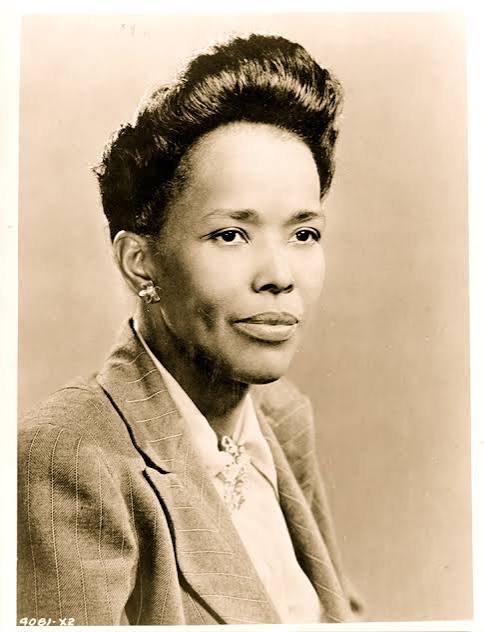
Ella Baker rarely wanted the spotlight, but almost every major civil rights organization of the mid-1900s ran better because she was involved. This biography covers her decades of organizing work and why she pushed young activists to lead themselves rather than follow one central leader.
Background
People search Ella Baker’s name because her influence runs through so many parts of the civil rights movement, the NAACP, Martin Luther King Jr.’s Southern Christian Leadership Conference (SCLC), and the Student Nonviolent Coordinating Committee (SNCC), even though she’s less widely known publicly than some of the leaders she helped train and support.
Latest Update
As of August 2026, Baker’s organizing philosophy, often summarized by her own phrase that ‘strong people don’t need strong leaders,’ continues to be studied in academic programs on grassroots organizing and movement building. No new biographical detail has recently emerged; renewed public attention tends to come from documentaries and books focused on movement organizers rather than only the most publicly visible leaders.
Full Profile
Family and Early Life
Baker was born in 1903 in Norfolk, Virginia, and raised largely in North Carolina, where her family had strong ties to community and church life, including stories from her grandmother about resisting slavery, which shaped Baker’s early sense of justice.
Career Path
Baker worked for the NAACP in the 1940s as a field secretary, traveling extensively through the South to organize local chapters. She later worked with Martin Luther King Jr.’s SCLC, and in 1960 played a key role helping Black college students organize the Student Nonviolent Coordinating Committee (SNCC), encouraging them to build independent, grassroots leadership rather than rely on a single prominent figurehead.
Age
Baker lived to age 83, born December 13, 1903, and dying December 13, 1986.
Religion
Baker was raised in a devout Baptist family, and church community networks played an important role in her early organizing work across the South.
Spouse/Partner
Baker married T.J. Roberts in 1940; the couple later separated, and Baker kept her organizing work largely independent of her personal life in public accounts.
Net Worth
Baker worked for modest wages throughout her career as a full-time organizer for nonprofit civil rights organizations. A specific net worth figure is not documented and would be speculative.
Parents
Her father was Blake Baker, who worked on steamships, and her mother was Georgianna Baker, a strong community and church figure who influenced Ella’s early values.
Height
No widely documented height records exist for Ella Baker from contemporary sources.
Education
Baker graduated as valedictorian from Shaw University in Raleigh, North Carolina, in 1927, a historically Black university, where she also pushed back against restrictive campus rules for women.
Hometown/State of Origin
Baker was born in Norfolk, Virginia, and raised primarily in Littleton, North Carolina.
Official/Archival Link
Ella Baker Center for Human Rights (Named in Her Honor)
Legacy and Lasting Impact
Baker’s influence on organizing theory extends well beyond the civil rights era. Her emphasis on developing local, collective leadership rather than centering movements around one prominent figure has become a widely referenced model in later social movements, including elements of contemporary grassroots organizing that explicitly cite her approach.
Several modern organizations and programs, including the Ella Baker Center for Human Rights, carry her name specifically to continue the participatory, community-driven organizing philosophy she championed throughout her decades of movement work.
| Date | Event |
|---|---|
| 1903 | Born in Norfolk, Virginia |
| 1927 | Graduates valedictorian from Shaw University |
| 1940s | Serves as a field secretary for the NAACP |
| 1957-1960 | Works as a key organizer for the SCLC |
| 1960 | Helps organize the founding meeting of SNCC at Shaw University |
| 1986 | Dies in New York City |
Historical Context
Baker’s organizing career spanned the shift from the NAACP’s more legally focused strategy in the 1940s to the direct-action tactics of the 1960s sit-in and Freedom Ride movements, giving her a rare, firsthand perspective across multiple distinct phases of civil rights strategy over several decades.
That long view shaped her skepticism toward relying on any single charismatic leader or single tactic, since she had already watched the movement’s approach evolve significantly once before and understood that sustainable change required flexible, locally rooted organizing structures rather than one fixed strategy.
Reader Questions (FAQ)
What organizations did Ella Baker work with?
She worked with the NAACP as a field secretary, later with Martin Luther King Jr.’s Southern Christian Leadership Conference, and helped found the Student Nonviolent Coordinating Committee (SNCC) in 1960.
Why is Ella Baker called a ‘behind the scenes’ leader?
She deliberately avoided the spotlight and pushed young activists to develop their own leadership skills instead of centering the movement around one prominent figure, a philosophy that shaped SNCC’s structure.
Did Ella Baker work with Martin Luther King Jr.?
Yes, she worked as a key staff organizer for his SCLC in the late 1950s, though she reportedly had some disagreements with the organization’s more top-down leadership style.
What is Ella Baker’s famous organizing philosophy?
She’s closely associated with the idea that ‘strong people don’t need strong leaders,’ emphasizing that communities should build their own collective leadership rather than depend on a single figurehead.
Did Ella Baker help start SNCC?
Yes, she organized the 1960 meeting at Shaw University that led to the founding of the Student Nonviolent Coordinating Committee, and she served as an early advisor to the group.
Why do people still search for Ella Baker today?
As more attention shifts toward the organizers who built the civil rights movement’s infrastructure, rather than only its most publicly recognized leaders, Baker’s decades of grassroots work have drawn growing recognition.
Did Ella Baker disagree with other civil rights leaders?
At times, yes. She reportedly had some friction with SCLC’s more centralized, minister-led leadership structure, preferring a model that empowered local organizers and young activists directly.
What does ‘participatory democracy’ mean in relation to Ella Baker?
It refers to her organizing philosophy that ordinary community members, not just designated leaders, should have direct input and decision-making power within a movement, a principle SNCC adopted partly through her influence.
Did Ella Baker work internationally?
Her documented organizing work was based primarily within the United States, focused on Southern and national civil rights organizations, rather than significant international activism.
What is Ella Baker’s connection to voter registration work specifically?
Through her NAACP field work and later SNCC involvement, she supported voter registration and community organizing efforts across the South throughout multiple distinct phases of her long career.
Wrap-Up
Ella Baker’s career is a reminder that movements don’t run on charismatic speeches alone. Someone has to organize chapters, train volunteers, and connect local communities to a larger cause, and Baker did that work for decades across multiple organizations.
Her insistence that ordinary people could lead themselves, rather than waiting for direction from a single prominent leader, directly shaped how SNCC operated and influenced organizing strategies that outlasted her own lifetime.
For readers today, Baker’s story fills in a part of civil rights history that often gets less attention than the movement’s most photographed leaders, and it’s an important one for understanding how large-scale organizing actually gets done.
Her insistence on shared leadership over centralized authority continues to shape how modern organizers think about building movements that can sustain themselves beyond any single figurehead.
Baker’s approach also influenced how later generations of organizers thought about sustainability within movements. By training local people to lead their own communities rather than depending on outside leadership, she helped build organizing structures that could continue functioning even when prominent national figures moved on or faced setbacks.
It’s also worth noting that Baker’s approach to organizing directly influenced how SNCC structured itself as an organization, deliberately avoiding a single national chairman model in its early years in favor of more distributed local leadership, a structural choice that traced directly back to the organizing philosophy she had been developing and refining since her earliest NAACP field work in the 1940s.
That structural choice is still referenced today whenever modern organizers debate the tradeoffs between centralized leadership and distributed, community-driven decision-making models.
It also explains why so many later organizers, well beyond the civil rights era, continue to cite her specific approach when designing their own grassroots campaigns.
Her insistence on shared, local decision-making rather than centralized command remains one of the most frequently cited organizing lessons drawn from the civil rights era.

John Wood is the founder and lead editor of Biography Region. He researches and writes accurate, engaging biographies of celebrities, entrepreneurs, influencers, and public figures, delivering well-sourced, reader-focused content that informs and inspires.