

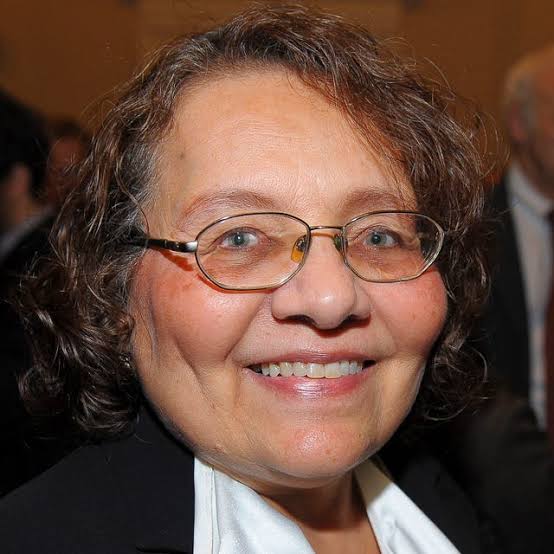
Diane Nash helped lead some of the most effective direct-action campaigns of the civil rights movement while still a college student. This biography covers her early activism in Nashville, her role in the Freedom Rides, and her continued advocacy in later decades.
Background
People search Diane Nash’s name because of her central, strategic role in two major civil rights campaigns, the Nashville sit-ins and the Freedom Rides, at a time when she was still in her early twenties, and because she remains a respected voice on organizing and nonviolent strategy.
Latest Update
As of August 2026, Diane Nash continues to be recognized through civil rights retrospectives, documentaries, and academic programs studying nonviolent direct action, and has participated in public commemorations of Freedom Rides anniversaries in past years. No unconfirmed claims about her current activities are made here; readers should check recent news directly for any current events involving her.
Full Profile
Family and Early Life
Nash was born in 1938 in Chicago, Illinois, and grew up in a relatively stable middle-class household. She later attended Fisk University in Nashville, Tennessee, where direct exposure to Southern segregation for the first time strongly shaped her decision to become an activist.
Career Path
Nash became a leading organizer of the Nashville sit-in movement in 1960, helping coordinate direct-action protests against segregated lunch counters. She later played a key role reviving the Freedom Rides in 1961 after the original riders faced violent attacks and organizers considered stopping, insisting the rides continue to avoid giving segregationist violence a win. She also worked closely with the Student Nonviolent Coordinating Committee (SNCC) and later contributed to voting rights organizing in Alabama.
Age
Nash was born May 15, 1938; as a historical figure whose activism is well documented from the 1960s onward, this article focuses on that documented period of her life rather than current personal details.
Religion
Nash’s early religious background included Catholic upbringing, and she later engaged deeply with Gandhian nonviolent philosophy as the guiding framework for her activism.
Spouse/Partner
Nash was married to fellow activist James Bevel during part of her civil rights work in the 1960s; the couple later divorced.
Net Worth
Nash worked primarily in nonprofit civil rights organizing roles during her most publicly documented period. A specific net worth figure is not documented and would be speculative.
Parents
Nash’s parents are not extensively detailed in widely available public biographical sources beyond her Chicago upbringing.
Height
No widely documented height records exist for Diane Nash from contemporary sources.
Education
Nash attended Howard University briefly before transferring to Fisk University in Nashville, where she became involved in civil rights organizing through workshops on nonviolent protest tactics.
Hometown/State of Origin
Nash was born and raised in Chicago, Illinois, before her activism work became centered in Nashville, Tennessee.
Official/Archival Link
Smithsonian National Museum of African American History and Culture
Legacy and Lasting Impact
Nash’s strategic decision-making during the Freedom Rides is now widely studied in academic programs focused on nonviolent direct action and movement leadership, often cited as a textbook example of how a small group’s resolve can prevent a movement from losing momentum after a violent setback.
Beyond the Freedom Rides, her later voting rights organizing work in Alabama, including contributions connected to the lead-up to the Selma campaigns, extended her strategic influence well past her initial recognition from the Nashville sit-ins.
Key Dates at a Glance
| Date | Event |
|---|---|
| 1938 | Born in Chicago, Illinois |
| 1959 | Enrolls at Fisk University in Nashville |
| 1960 | Helps lead the Nashville sit-in movement |
| 1961 | Plays a key role reviving and continuing the Freedom Rides |
| 1961-1965 | Continues organizing with SNCC and voting rights campaigns in the South |
Historical Context
The Nashville sit-in movement Nash helped lead was distinguished by extensive advance preparation, including role-playing workshops where activists practiced remaining nonviolent while being verbally and physically provoked, a level of tactical discipline that set Nashville’s campaign apart from some less-organized sit-in efforts elsewhere in the South.
That same disciplined, prepared approach carried directly into her Freedom Rides leadership, where her insistence on continuing the campaign after violent attacks reflected a broader belief, shared among Nashville-trained activists, that abandoning a nonviolent campaign under violent pressure would only encourage further violence against future efforts.
Reader Questions (FAQ)
What is Diane Nash best known for?
She is best known for leading the Nashville sit-in movement in 1960 and for insisting the Freedom Rides continue in 1961 after violent attacks nearly ended the campaign.
Why were the Freedom Rides important?
The Freedom Rides tested whether Southern states were complying with federal rulings desegregating interstate bus travel, and they exposed continued violent resistance to desegregation in the South.
What role did Diane Nash play in the Freedom Rides?
When violence against the original Freedom Riders led some organizers to consider ending the campaign, Nash argued strongly for continuing, helping recruit and organize a new group of riders to keep the effort going.
Did Diane Nash work with SNCC?
Yes, she was an early and active member of the Student Nonviolent Coordinating Committee, contributing to its direct-action strategy in its founding years.
Where did Diane Nash’s activism begin?
Her activism began at Fisk University in Nashville, where she took part in nonviolent protest workshops and helped organize sit-ins targeting segregated lunch counters downtown.
Why is Diane Nash still studied today?
Her strategic decision-making during the Freedom Rides is frequently cited in studies of nonviolent direct action as an example of how young organizers can shape a movement’s direction under pressure.
Did Diane Nash face arrest during her activism?
Yes, she was arrested multiple times during her civil rights work, including during the Nashville sit-ins and while pregnant during later organizing efforts, reflecting the personal risk activists regularly accepted.
What honors has Diane Nash received for her activism?
She has received numerous civil rights honors and recognitions over the decades for her organizing work, including awards recognizing her strategic role in the Freedom Rides and broader movement history.
Did Diane Nash face arrest for her Freedom Rides work?
Yes, she was arrested multiple times in connection with her Freedom Rides organizing and related civil rights activities during the early 1960s.
What later voting rights work is Diane Nash associated with?
She contributed to organizing efforts connected to the broader Alabama voting rights campaigns of the mid-1960s, building on her earlier direct-action leadership experience.
Wrap-Up
Diane Nash’s activism shows how a small group of committed, strategically minded young people can shift the direction of a national movement, particularly her insistence on continuing the Freedom Rides when others considered stopping.
Her work with the Nashville sit-ins also demonstrates how disciplined nonviolent tactics, carefully practiced in advance through workshops, could be used to directly challenge segregation in everyday public spaces like lunch counters.
For readers today, Nash’s story highlights the strategic thinking behind civil rights direct action, work that required more than courage alone, it required planning, coordination, and a willingness to hold firm under real danger.
Her career is frequently used as a case study in leadership under pressure, showing how a clear strategic decision at the right moment can determine whether a movement’s momentum survives a serious setback.
Nash’s contributions were sometimes underrecognized publicly at the time partly because she deliberately avoided personal spotlight in favor of group strategy sessions, a pattern common among SNCC’s core organizers, who generally emphasized collective decision-making over individual celebrity.
It’s also worth noting that Nash’s approach to activism consistently prioritized careful strategic planning over spontaneous protest, a pattern visible from the structured Nashville sit-in workshops through her insistence on continuing the Freedom Rides under organized, deliberate leadership rather than allowing the campaign to end reactively after violence disrupted the original plan.
That consistent emphasis on preparation over improvisation is a big part of why her leadership decisions are still studied in organizing courses today.
That consistency across multiple campaigns, from Nashville to the Freedom Rides to later Alabama organizing, reflects a coherent strategic philosophy rather than isolated moments of courage.
Her career remains a frequent case study in leadership training programs focused on how disciplined preparation can carry a movement through moments of serious crisis.
That consistent track record continues to make her one of the civil rights movement’s most frequently cited examples of strategic, disciplined nonviolent leadership under real, sustained pressure from hostile opponents.

John Wood is the founder and lead editor of Biography Region. He researches and writes accurate, engaging biographies of celebrities, entrepreneurs, influencers, and public figures, delivering well-sourced, reader-focused content that informs and inspires.