

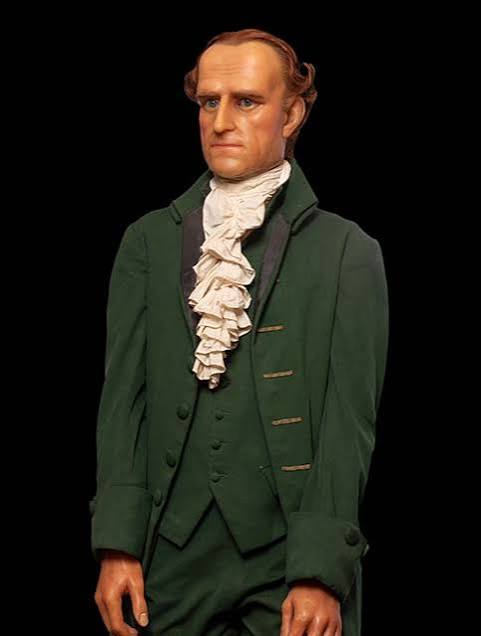
Patrick Henry never signed the Declaration of Independence or attended the Constitutional Convention, yet his speeches helped push colonial opinion toward revolution. This biography covers his early struggles, his legal career, and the speech that made him famous.
Background
Patrick Henry keeps coming up in searches largely because of one line: ‘Give me liberty, or give me death!’ People searching his name usually want to know who said it, why, and what happened to him afterward, since he’s less consistently covered in classrooms than Jefferson or Franklin.
Latest Update
As of August 2026, Henry’s home at Red Hill in Virginia continues to operate as a historic site and educational resource, with ongoing preservation work on original structures and artifacts. No new biographical detail has recently changed the accepted record of his life; renewed attention typically comes from civics education content referencing his famous 1775 speech.
Full Profile
Family and Early Life
Henry was born in 1736 in Hanover County, Virginia, to a moderately prosperous family. His early business ventures, including a store and farming attempts, largely failed before he turned to law, a career shift that ended up suiting him far better.
Career Path
Henry became a self-taught lawyer and quickly built a reputation as a compelling courtroom speaker. He entered Virginia politics, delivered his famous ‘Give me liberty, or give me death’ speech to the Virginia Convention in 1775 urging military preparation against Britain, and later served as Virginia’s first post-independence governor, a role he held multiple non-consecutive terms.
Age
Henry lived to age 63, born May 29, 1736, and dying June 6, 1799.
Religion
Henry was raised Anglican and remained a practicing Christian throughout his life, later expressing more evangelical leanings in his religious views.
Spouse/Partner
Henry married twice: first to Sarah Shelton in 1754, with whom he had six children, and after her death, to Dorothea Dandridge in 1777, with whom he had eleven more children.
Net Worth
Henry’s finances were unstable early on due to failed business ventures, but improved significantly once his legal and political career took off. A specific modern-equivalent net worth is not reliably documented.
Parents
His father was John Henry, a Scottish-born planter and local judge, and his mother was Sarah Winston Syme.
Height
Contemporary accounts describe Henry as tall and lean, though exact height measurements are unconfirmed.
Education
Henry had limited formal schooling and largely educated himself in law through independent study rather than attending a college, which was unusual for a prominent lawyer of his time.
Hometown/State of Origin
Henry was born in Hanover County, Virginia, and spent most of his life in various parts of the Virginia colony and later state.
Official/Archival Link
Red Hill: Patrick Henry National Memorial (Official Site)
Legacy and Lasting Impact
Henry’s influence outlasted his own lifetime mainly through rhetoric rather than institutions. Unlike Founders who left behind constitutions or government departments, Henry’s lasting contribution is largely his language, phrases from his speeches are still taught in American schools as prime examples of persuasive political oratory.
His Anti-Federalist concerns about centralized government power also continued to echo in American political debates long after the Constitution’s ratification, feeding into later arguments about states’ rights and the proper limits of federal authority.
| Date | Event |
|---|---|
| 1736 | Born in Hanover County, Virginia |
| 1760 | Admitted to the Virginia bar as a lawyer |
| 1765 | Elected to the Virginia House of Burgesses |
| 1775 | Delivers the ‘Give me liberty, or give me death’ speech |
| 1776-1786 | Serves multiple terms as Governor of Virginia |
| 1788 | Opposes ratification of the U.S. Constitution at the Virginia Convention |
| 1799 | Dies at Red Hill, Virginia |
Historical Context
Henry’s rise as a lawyer and orator took place within Virginia’s local court system, where persuasive public speaking carried real practical weight in front of juries and assemblies long before radio, television, or recorded audio existed to spread political rhetoric more broadly.
That context helps explain why a single speech could carry so much historical weight. In an era where political persuasion depended almost entirely on live, in-person delivery, a moment like Henry’s 1775 address to the Virginia Convention could shift real political outcomes in ways a written pamphlet alone often could not.
Reader Questions (FAQ)
What is Patrick Henry most famous for?
He is best known for his 1775 speech to the Virginia Convention, which included the line ‘Give me liberty, or give me death!’ urging colonists to prepare for armed resistance against Britain.
Did Patrick Henry sign the Declaration of Independence?
No. He was not a delegate to the Continental Congress at the time it was signed; he was serving in Virginia government during that period.
Was Patrick Henry a lawyer?
Yes, he was a self-taught lawyer who built his early reputation through persuasive courtroom arguments before moving into full-time politics.
Did Patrick Henry become governor?
Yes, he served as Virginia’s first governor after independence and held the office for multiple non-consecutive terms.
Did Patrick Henry support the U.S. Constitution?
No, he opposed ratification of the Constitution, fearing it gave too much power to a central government, and he was a leading Anti-Federalist voice in Virginia’s ratification debates.
Why is Patrick Henry still quoted today?
His liberty-or-death speech remains one of the most quoted lines from the American Revolution and is frequently referenced in civics education and political rhetoric.
Was Patrick Henry present for the Constitutional Convention?
No, he was invited but declined to attend, reportedly saying he ‘smelled a rat,’ reflecting his early suspicion that the convention would produce a stronger central government than he wanted.
Did Patrick Henry hold any national office?
No, his political career was based almost entirely in Virginia state government and the earlier Continental Congress rather than in a national executive or legislative role after independence.
Did Patrick Henry own enslaved people?
Yes, like many prominent Virginians of his era, Henry enslaved people on his plantations, a fact that sits alongside his famous rhetoric about liberty, similar to contradictions seen in several other Founders of the period.
How is Patrick Henry remembered in Virginia today?
Several historic sites, including his home at Red Hill, preserve and interpret his legacy, and his name appears widely on schools, roads, and civic institutions throughout the state.
Wrap-Up
Patrick Henry’s path to fame wasn’t through founding documents or new government offices, it was through his voice. His speeches moved rooms full of skeptical colonists toward a decision that changed the course of American history.
His later opposition to the Constitution is often left out of shorter summaries, but it matters. Henry worried a strong federal government could threaten the same liberties he’d spent years arguing for, a tension that still comes up in American political debates today.
For readers today, Henry is a reminder that not every influential founding-era figure held formal national office. Sometimes persuasion itself was the contribution.
That makes Henry something of an outlier among the most famous Founders: a man remembered chiefly for what he said rather than what he built, and whose warnings about centralized power still surface in political arguments today.
Henry’s speeches, delivered without a surviving verbatim transcript in most cases, were often reconstructed decades later from listener recollections, which means some popular quotes attributed to him, while broadly consistent with contemporary accounts, may not be word-for-word exact. Historians generally treat the substance of his most famous lines as reliable while noting this documentation gap.
It’s also worth noting that Henry’s legal career gave him practical courtroom experience that shaped his later political oratory style. Unlike some Founders who developed their rhetorical skills primarily through formal academic training, Henry’s persuasive techniques were tested and refined in front of real juries deciding real cases, a background that likely contributed to the directness and emotional force that made his political speeches so effective when the stakes shifted from individual court cases to the future of the colonies themselves.
That practical courtroom grounding is a detail worth remembering whenever his speeches are discussed purely as abstract political philosophy rather than tested persuasive skill.
That combination of courtroom persuasion and political conviction is what made Henry such an effective voice at exactly the moment colonial resistance needed one.
Modern civics courses still return to his 1775 speech precisely because it compresses a complex political argument into language ordinary people could immediately feel and remember.
It’s a rhetorical legacy that still gets cited in modern political speechwriting as a model for compressing conviction into a single memorable line.

John Wood is the founder and lead editor of Biography Region. He researches and writes accurate, engaging biographies of celebrities, entrepreneurs, influencers, and public figures, delivering well-sourced, reader-focused content that informs and inspires.