

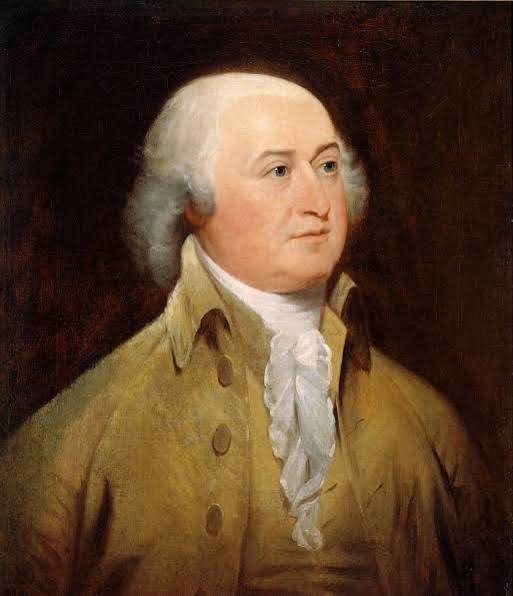
John Adams didn’t just have a family, he had a genuine partnership with his wife Abigail that historians still study through their letters, and a son who went on to become president himself. This article looks at the people closest to Adams and how they shaped, and were shaped by, his political life.
Background
People search John Adams’ family life mainly because of two things: the surviving letters between him and his wife Abigail, which are unusually detailed and personal for the era, and the fact that his son John Quincy Adams became the sixth U.S. president, making them one of the few father-son presidential pairs in American history.
Latest Update
As of August 2026, the Adams family letters continue to be digitized and studied by the Massachusetts Historical Society, giving researchers and the public deeper access to Abigail Adams’ correspondence in particular. No new major family relationship has recently come to light; interest remains steady due to ongoing historical scholarship and popular biographies and documentaries about the Adams family.
Full Profile
Family and Early Life
Adams grew up in Braintree, Massachusetts (now Quincy), in a farming family. As an adult, he married Abigail Smith in 1764, and the couple had six children, though two died young. Their surviving children included Abigail (Nabby), John Quincy, Charles, and Thomas Boylston Adams.
Career Path
While Adams built his political career, first as a Massachusetts lawyer and delegate to the Continental Congress, then as a diplomat, Vice President, and second U.S. President, Abigail managed the family farm and finances for long stretches while he was away, often for years at a time, and the two maintained their relationship largely through an extensive written correspondence.
Age
John Adams lived to age 90, born October 30, 1735, and dying July 4, 1826.
Religion
Adams was raised Congregationalist and later identified with Unitarian beliefs as an adult, valuing reason alongside faith.
Spouse/Partner
Adams married Abigail Smith in 1764. Their marriage is considered one of the most well-documented and intellectually equal partnerships among the Founding Fathers’ relationships, largely because of their surviving letters.
Net Worth
The Adams family was comfortable but not wealthy by the standard of Virginia planters like Jefferson; their income came primarily from farming and Adams’ legal and later government work. A precise net worth figure is unconfirmed.
Parents
His father was John Adams Sr., a farmer and local town official, and his mother was Susanna Boylston.
Height
Adams was often described as of average height and stocky build for the period; precise measurements are unconfirmed.
Education
Adams graduated from Harvard College in 1755 and went on to study law, later becoming a practicing attorney in Massachusetts.
Hometown/State of Origin
Adams was born and raised in Braintree, Massachusetts, a town later renamed Quincy in honor of the family.
Official/Archival Link
Massachusetts Historical Society: Adams Family Papers
Legacy and Lasting Impact
The Adams family’s long-term impact on American politics is unusual even among founding-era families. Beyond John Quincy Adams’ presidency, later generations of the family, including diplomat and historian Charles Francis Adams and historian Henry Adams, continued contributing to American public life and letters well into the 20th century.
The surviving Adams family letters have also had a lasting scholarly impact, giving historians one of the richest primary-source windows into daily domestic life, political opinion, and marriage during the Revolutionary era, a level of documentation few other founding families left behind.
Key Dates at a Glance
| Date | Event |
|---|---|
| 1735 | John Adams born in Braintree, Massachusetts |
| 1764 | Marries Abigail Smith |
| 1765-1801 | Six children born; two die young |
| 1767 | Son John Quincy Adams born |
| 1797-1801 | John Adams serves as second U.S. President |
| 1825-1829 | John Quincy Adams serves as sixth U.S. President |
| 1826 | John Adams dies on July 4 |
Historical Context
The Adams household operated during a period when a wife managing a farm alone for years at a time, as Abigail did, was both practically necessary and legally constrained, since married women in the era had limited independent property and financial rights under colonial and early American law.
Abigail’s letters show her navigating that gap directly, managing significant financial and agricultural decisions in practice while having no formal legal authority to do so, a tension that adds important context to her often-quoted political commentary within the family correspondence.
Reader Questions (FAQ)
Who was John Adams married to?
He was married to Abigail Adams (née Smith), whom he wed in 1764. Their extensive letters remain some of the most studied correspondence from the founding era.
How many children did John and Abigail Adams have?
They had six children together, though two died in childhood or infancy. Their surviving children included Nabby, John Quincy, Charles, and Thomas Boylston.
Did any of John Adams’ children become president?
Yes. His son John Quincy Adams became the sixth President of the United States, making the Adamses one of the few father-son presidential families in U.S. history.
Why are the Adams family letters so well known?
Abigail and John Adams wrote each other frequently during his long absences for public service, and the letters cover politics, family life, and personal opinions in unusually candid detail for the period.
Did Abigail Adams influence John Adams’ politics?
Yes, informally. Her letters show she discussed political matters with him directly, including her well-known request that he ‘remember the ladies’ when considering new laws, though she held no formal political power herself.
Why do people still search for the Adams family today?
The combination of a well-documented marriage, a multi-generational political dynasty, and accessible primary-source letters keeps the Adams family a popular subject in both academic and general history searches.
Did John Adams and Abigail Adams see each other often?
No, they spent long stretches apart, sometimes years, due to Adams’ diplomatic and political postings, and relied heavily on letters to stay connected during those separations.
Are the Adams family letters publicly available today?
Yes, a large portion of the Adams family correspondence has been digitized and is accessible through the Massachusetts Historical Society’s Adams Papers project.
Did John Adams support women’s rights during his time?
He did not enact formal policy changes on the issue, though Abigail’s letters pushing him to ‘remember the ladies’ are often cited as an early documented expression of concern for women’s legal standing within the founding generation.
How did the Adams family’s political dynasty continue after John Quincy Adams?
Later generations, including Charles Francis Adams as a diplomat and historians Henry and Brooks Adams, continued contributing to American public and intellectual life well into the 20th century.
Wrap-Up
John Adams’ family life is unusual among the Founding Fathers because so much of it survives in his and Abigail’s own words. Their letters give a rare, personal window into what it was like to build a country while also trying to raise a family and keep a farm running.
The fact that their son John Quincy Adams later became president adds another layer, turning the Adams family into one of America’s earliest political dynasties, well before that became a familiar pattern in American politics.
For readers today, the Adams family offers something many other founding-era families don’t: a real, documented marriage of equals, disagreements and all, rather than a polished or one-sided historical account.
Few founding-era families left behind a paper trail this rich, which is part of why historians keep returning to the Adamses when they want to understand not just political decisions, but the personal lives behind them.
The family’s political influence also extended to daughter Abigail ‘Nabby’ Adams and sons Charles and Thomas Boylston Adams, though none achieved the national prominence of their father or older brother John Quincy. Charles in particular struggled with alcoholism and financial troubles, a difficult chapter often overshadowed by the family’s more celebrated achievements.
It’s also worth remembering that Abigail Adams managed not just household matters but real financial decisions, land transactions, and farm operations during John’s long absences, work that required practical judgment even though she held no formal legal standing to make many of those decisions independently under the law of the time. That combination of real responsibility and limited formal authority runs through much of her correspondence, and it’s part of what makes the Adams family letters such a valuable historical record beyond their political content alone.
This is part of why historians treat the Adams correspondence as such a valuable primary source, it captures real decision-making, not just political theory.

John Wood is the founder and lead editor of Biography Region. He researches and writes accurate, engaging biographies of celebrities, entrepreneurs, influencers, and public figures, delivering well-sourced, reader-focused content that informs and inspires.