

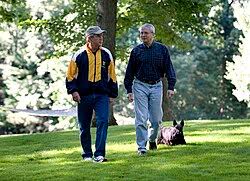
There’s a wooded mountain compound in Maryland that most Americans have heard of but almost none have ever seen up close. Camp David Wiki searches spike every time a president heads there — and right now, it’s trending again. This article breaks down the full story: where Camp David is, how it came to exist, what happens inside, and why it keeps showing up at the center of American history.
Background: What Is Camp David and Why People Search for It
Camp David is the official country retreat of the President of the United States. It sits inside Catoctin Mountain Park, a federally protected forest in Frederick County, Maryland, close to the small town of Thurmont. By road it’s roughly 60 miles northwest of the White House. By presidential helicopter, the trip takes around 25 minutes.
The compound isn’t open to tourists, journalists, or the general public. It’s an active military installation — formally called Naval Support Facility Thurmont — operated by the U.S. Navy and staffed by Marine Corps and Navy personnel. The whole property is enclosed by maximum-security fencing, and access requires a White House invitation. That level of secrecy is part of what makes it so fascinating to people.
People search for Camp David for a wide range of reasons: history class assignments, political news coverage, curiosity after a presidential visit makes headlines, or deep dives into events like the 1978 Camp David Accords. It’s one of those place-names that gets repeated constantly in American political history — but rarely gets a thorough plain-language explanation.
Latest Update
President Donald Trump held a Cabinet meeting at Camp David on July 31, 2026, bringing senior government officials to the mountain retreat instead of conducting the session at the White House. The move pushed “Camp David wiki” and related searches higher across multiple search engines within hours of the news breaking.
Trump has visited Camp David during both of his presidential terms, though he tends to spend weekends at his own properties — primarily Mar-a-Lago in Palm Beach, Florida, and his golf courses in New Jersey and Virginia — more than most modern presidents used the retreat. The July 31 meeting took place during an active period of domestic and international policy activity. As of this date, no official agenda for that Cabinet session has been publicly disclosed by the White House.
⚡ Why It’s Trending: Trump’s rare Cabinet meeting at Camp David on July 31, 2026 sparked fresh public curiosity about the retreat’s history, layout, and purpose.
Full Profile: Everything You Need to Know About Camp David
Origins and How It Was Built
The land that became Camp David was originally developed between 1935 and 1938 by the Works Progress Administration — one of the New Deal programs FDR launched to put Americans back to work during the Great Depression. At that time, it wasn’t a presidential site at all. It was built as a recreational camp for federal government workers and their families, set in a cool mountain forest well above the summer heat of the mid-Atlantic coast.
Everything changed when the United States entered World War II in December 1941. President Franklin Roosevelt had a habit of relaxing aboard the presidential yacht on the Potomac River on weekends. His security team grew increasingly uncomfortable with this. German U-boats had been detected operating along the East Coast, and keeping the Commander-in-Chief on open water during a shooting war felt like an unacceptable risk. Roosevelt asked the National Park Service to find a safe alternative — something within 100 miles of the White House, secure, accessible by car, and cool enough to actually be pleasant in summer. The Catoctin Mountain camp fit every requirement. Roosevelt took it over and named it Shangri-La, after the mythical Himalayan paradise from James Hilton’s 1933 novel Lost Horizon.
His first recorded use of the compound as a presidential retreat was in 1942. The following year he brought British Prime Minister Winston Churchill there, where the two leaders discussed strategy and even went on a fishing trip together — reportedly also talking through early plans for the Normandy invasion.
How It Got Its Name
When Dwight D. Eisenhower took office in January 1953, he seriously considered shutting the camp down. He viewed it as an unnecessary government extravagance. He was eventually persuaded to keep it — and once he warmed to the place, he renamed it. Eisenhower called it Camp David to honor two people he loved: his grandson, David Eisenhower, and his father, David Jacob Eisenhower.
That decision turned out to have some interesting historical symmetry. David Eisenhower — the grandson — later married Julie Nixon, the daughter of President Richard Nixon, creating a family connection that spanned three administrations. The name “Camp David” has stuck through every presidency since.
Year Established as a Presidential Retreat
| Detail | Information |
|---|---|
| Original construction | 1935–1938 (Works Progress Administration) |
| Established as presidential retreat | 1942 by President Franklin D. Roosevelt |
| Renamed “Camp David” | 1953 by President Dwight D. Eisenhower |
| Current formal name | Naval Support Facility Thurmont |
| In continuous presidential use since | 1942 (every president from FDR onward) |
Size, Location, and Physical Layout
The compound covers approximately 125 acres of mountain terrain, though some sources cite slightly different figures depending on which boundary measurements are referenced. The main structures are connected by winding wooded paths, and guests are given golf carts to get around. Here’s a breakdown of the key facilities:
| Facility | Purpose |
|---|---|
| Aspen Lodge | The president’s private residence on the grounds — has bedrooms, a small office space, fireplaces, and a large outdoor flagstone patio. Also includes a heated swimming pool and a single-hole golf course with multiple tees. |
| Laurel Lodge | The main meeting hall where official summits, meals, and large gatherings take place — this is where the Camp David Accords negotiations were held. |
| Evergreen Chapel | A small non-denominational chapel on the grounds. It’s also the site of the only wedding ever held at Camp David — George H.W. Bush’s daughter Dorothy married Bobby Koch there in 1992. |
| Guest Cabins | About a dozen separate cabins for visiting heads of state and guests. Each is named after a tree species. |
| Recreation | Bowling alley, movie theater, swimming pool, tennis courts, horseshoe pits, skeet shooting range, fitness center, basketball court |
The location in the Blue Ridge Mountains means temperatures at Camp David run noticeably cooler than Washington, D.C. — which is part of why FDR wanted it in the first place, and why it remains a comfortable working retreat even in midsummer.
The Biggest Moments in Its History
Camp David has been the setting for some of the most consequential decisions in modern American history. Here’s a timeline of the landmark events:
| Year | Event |
|---|---|
| 1942 | FDR establishes the retreat and names it Shangri-La; begins using it for war planning and rest |
| 1943 | Churchill visits; fishing trip and early D-Day strategy discussions |
| 1953 | Eisenhower renames it Camp David after his grandson and father |
| 1959 | Eisenhower hosts Soviet Premier Nikita Khrushchev — the first time a Soviet leader had ever visited the United States |
| 1971 | Nixon meets with economic advisers over inflation and a potential run on U.S. gold reserves; deliberations lead to ending the gold-backed dollar |
| 1973 | Nixon hosts Soviet leader Leonid Brezhnev |
| 1978 | Carter brokers 13 days of secret talks between Egypt’s Sadat and Israel’s Begin — resulting in the Camp David Accords |
| 1984 | Reagan hosts British PM Margaret Thatcher for the first time at the retreat |
| 1990 | George H.W. Bush hosts Soviet leader Mikhail Gorbachev |
| 1992 | Only wedding ever held at Camp David — Bush daughter Dorothy marries at Evergreen Chapel |
| 2000 | Clinton hosts Israeli PM Ehud Barak and Palestinian Authority Chairman Yasser Arafat for a summit |
| 2001 | George W. Bush convenes National Security Council at Camp David following the September 11 attacks |
| 2012 | Obama hosts the G8 Summit |
| 2026 | Trump holds a Cabinet meeting at the retreat on July 31 |
The Camp David Accords — The Most Famous Moment
🕊️ Historic Fact: The Camp David Accords of 1978 produced the first peace agreement between Israel and an Arab country — a direct result of 13 days of secret talks at this mountain retreat.
In September 1978, President Jimmy Carter brought Egyptian President Anwar Sadat and Israeli Prime Minister Menachem Begin to Camp David for what turned into 13 days of intense, mostly private negotiations. The outside world was largely shut out — no press coverage, no outside access. That controlled, isolated environment was deliberate. Carter believed both leaders needed to be cut off from daily political noise to actually make progress.
What emerged were the Camp David Accords — a framework agreement that led directly to the Egypt-Israel Peace Treaty signed in March 1979. It was the first peace agreement ever reached between Israel and an Arab nation. The world took notice. Both Sadat and Begin were awarded the Nobel Peace Prize the same year the talks took place. Carter’s role as broker — patient, persistent, and willing to spend nearly two weeks negotiating face-to-face — is widely considered one of the most remarkable diplomatic achievements in modern American presidential history.
Who Runs and Operates It
Camp David is owned by the U.S. Department of Defense and operated by the U.S. Navy under the command of Naval District Washington. Day-to-day management falls under the White House Military Office. Marine Corps personnel provide security and much of the staffing. Because it’s classified as an active military installation, standard freedom-of-information rules about public access don’t apply — the president effectively controls who goes in and out.
Official Website
For verified official information about Camp David and its history, the primary government source is the White House’s own published material at whitehouse.gov. The National Archives and presidential libraries also maintain detailed records about specific events that took place at the retreat.
Reader Questions (FAQ)
Where exactly is Camp David located?
Camp David is located in Catoctin Mountain Park, Frederick County, Maryland, just west of the small town of Thurmont. It’s roughly 60 miles northwest of Washington, D.C. by road, and about a 25-minute trip by presidential helicopter.
Why is it called Camp David and not Shangri-La?
President Eisenhower renamed it in 1953 to honor two people with the name David: his grandson David Eisenhower and his father, David Jacob Eisenhower. Before that, FDR had named it Shangri-La after the fictional paradise in James Hilton’s 1933 novel Lost Horizon.
Can the public visit Camp David?
No. Camp David is an active military installation surrounded by maximum-security fencing. There are no public tours, no visitor programs, and no public events. The only people who get inside are those invited by the White House, and journalists are barred unless specifically brought in to cover a designated event.
What were the Camp David Accords?
The Camp David Accords were a peace framework negotiated in September 1978 between Egyptian President Anwar Sadat and Israeli Prime Minister Menachem Begin, brokered by President Jimmy Carter during 13 days of private talks at the retreat. They led to the 1979 Egypt-Israel Peace Treaty — the first such agreement between Israel and an Arab country. Both Sadat and Begin received the Nobel Peace Prize for their role.
How big is Camp David?
The compound covers approximately 125 acres of mountain terrain in the Catoctin range. It includes around a dozen guest cabins, the president’s private residence (Aspen Lodge), a main meeting hall (Laurel Lodge), a chapel, and a range of recreational facilities from a bowling alley to a skeet shooting range.
Has Trump used Camp David during his presidency?
Yes. Trump has visited Camp David during both of his presidential terms, though he uses it less frequently than most recent predecessors, typically preferring his own properties at Mar-a-Lago and his golf courses. His most recent documented visit was a Cabinet meeting held there on July 31, 2026.
Who was the first president to use Camp David?
President Franklin D. Roosevelt was the first to use it as a presidential retreat, establishing it under the name Shangri-La in 1942 as an alternative to his usual Potomac River yacht cruises — which his security team considered too risky during wartime.
Wrap-Up
Camp David is easy to forget about when it’s quiet — which is exactly what it’s designed to be. No press corps camped outside the gate, no public schedule, no cameras unless the White House specifically invites them. That deliberate invisibility is precisely what makes it so effective as both a working retreat and a diplomatic setting. Presidents have used that isolation to think, rest, host allies, and conduct negotiations that simply couldn’t happen in the fishbowl environment of the White House.
The 1978 Accords stand as the clearest proof of what that environment can produce. Thirteen days in those wooded Maryland cabins yielded the first Arab-Israeli peace treaty — an outcome that decades of formal diplomacy in grander settings had failed to deliver. Whether you credit the mountain air, the privacy, or just Carter’s relentless patience, the setting clearly mattered. And it’s worth noting: that summit happened not in a grand international forum, but in a collection of quiet wooden cabins about an hour from Washington.
Every president since FDR has found some use for the place, even those who didn’t go often. That continuity — across wildly different personalities, parties, and eras — says something. Some tools in the American presidency stay useful not because they’re impressive, but because they work quietly and without fuss. Camp David is one of those tools, and it’s likely to stay that way for a long time to come.

John Wood is the founder and lead editor of Biography Region. He researches and writes accurate, engaging biographies of celebrities, entrepreneurs, influencers, and public figures, delivering well-sourced, reader-focused content that informs and inspires.